Thursday, 11 August 2011

Trip to Sungei Bulog Wetland reserve

About 2 months ago, I visited Singapore's nature reserve: Sungei Buloh. Having read the chapter of Ecology in my science textbook, I was inspired to look for the phenomenon of the interactions in an ecosystem for myself. And this did not disappointed me, as I found almost all that I wanted there. Mainly, I was looking mainly for interactions between organisms and the general conditions of the swampy environment. I also encountered so many unique adaptations of organisms that I would not have enough time to describe them all. So here are my brief findings:

1) Adaptations of a crab
Crab and its habitat
zoom in on crab


Crabs have an outermost shell, or carapace, that acts as a protective armor to help the crustacean protect its vital organs during an attack from potential predators. Also, for each variety of crab, they have a different outer shell color as it helps them blend into their surroundings. For example the crab stated above has similar colours as the rock and is hard to notice from a distance.

Besides that, as shown in the crab above, they have eyes that are mounted on flexible, lengthy stalks which enables the crab to be able to see to the side, front and back in its search for food or predators.
Next, crabs have large front claws, or chelipeds, and these pincer like claws are crucial for the crab’s defense and collection of prey for food.

Finally, crabs have antennas and many legs that enables them to smell, feel, and move safely away from predators and find food swiftly.
 
2) Abiotic factors
Typical mangrove soil
 Abiotic components of mangrove soil consists of  the pH of the damp soil, the available oxygen, nutrients, winds and currents, light, temperature, humidity, tides and salinity.
From the picture, we can tell that in this particular instance, the soil is very moist due to the constant tidal waves that sweeps through the mangroves, the pH is low due to the decaying leaves, the available oxygen is scarce due to the soil being dense, the nutrients available is high due to the many trees that provide it, and the light is low due to the many particles in the soil.

3) Population interactions: mutualism

Insects on the flower

Flower


Mutualism is an interaction between two or more species, where species derive a mutual benefit, meaning that both parties get a benefit. One or both species involved in the interaction may be obligate, meaning they cannot survive in the short or long term without the other species.

In the picture above, the insects help to pollinate the flower, and the insects get food and nutrients as well. Therefore, both parties benefit and this therefore can be said to be Mutualism.
 

4) Population interactions: commensalism

Mangrove trees produce a lot of leaves and other organic matter like all other trees. However, instead of accumulating these leaves and organic matter in the soil, the leaves fall in the water, where they rot and provide food for microbes and many tiny animals in the water. Furthermore, the roots of the mangroves also provide shelter because they block our large birds and other predators that are eager to prey on them.

Mangrove trees in a swamp

Because there is lots of food in mangrove areas, and good shelter among the mangrove roots, some kinds of fish come there to reproduce. Therefore it can be said that the mangroves are a critical habitat upon which these species depend for survival, and if something happens to the mangroves, the future of these kinds of fish will be affected.

However, the Mangroves do not really depend on these animals in turn in any way in their growth, therefore this sort of relationship the mangrove has with its marine life is commensalism, where the marine animals benefit while the tree remains neutral.

5) Competition

Plants competing for resources
All plants need nutrients, light and water to survive. However, if a large number of such plants compete in a small area, there will be scarce resources which are insufficient for the plant’s growth. Therefore, the plants compete against one another for their reward: namely water, sunlight and nutrients. Some plants go mainly on the offense, trying to get as much as they can. Other plants use defensive methods to make sure that what they already have will not be taken away by others.

In the above picture, the main area of competition which is obvious to us is in gathering available sunlight. The plants grow as tall as they can, trying to gather as much sunlight at the expense of nearby, shorter plants.

6) Population interactions: exploitative relationships(parasitism)

Plant growing on tree
The harms and benefits in parasitic interactions concern the biological fitness of the organisms involved. Parasites reduce host fitness, ranging from general or specialized pathology such as a modification of host behaviour. In the mean time, parasites increase their fitness by exploiting hosts for resources necessary for the parasite's survival.

In the above picture, we can see the shoot of the young plant  coiled around a tree. The plant that grow on a tree feeds of the nutrients of the host plant in terms of nutrients, water and food for its own use to grow. The tree does not gain any benefits, and instead loses its resources to this plant, therefore it can be said that the plant is the parasite that feeds of the host tree.

Must leaders be judged by what they do in their private lives regardless of their leadership qualities?

With regard to leaders with double lives, let me start with a quote from Matthew, Disciple of Jesus, that bests describes them: " You are like whitewashed tombs, which look beautiful on the outside but on the inside are full of dead men's bones and everything unclean. In the same way, on the outside you appear to people as righteous but on the inside you are full of hypocrisy and wickedness." Such leaders do their best to present well of themselves in public, but what they do in their private lives are far from the same utopian state.

Let us recap on exactly what characteristics classifies a good leader. This is not with reference to a company manager, a state governor,  a president or so on so forth. But, in a larger sense that applies to all leaders in any field, in any state, in any country.
They are to serve their people the best they can;  they are to be compassionate about their job; they are to uphold morale standards for their people;  they are to be respectful to their people's opinions, without any they would never make a good leader.

So what if they might be able to manage their jobs well, so what if they get along with their colleagues, so what if they have good leadership qualities? Secretly, if they are doing something else behind the scenes, would all this matter? Would anyone like to have a leader that does not practice what they preach?

All leaders are subject for scrutiny through their actions taken out of office as the private lives of leaders matter to the people.

Before I move on we should stop and review: what constitutes a private life? To me, it ranges everything from hobbies to drug taking. Some would argue that this would be the equivalent of gossip, but this "gossip" is duly necessary. It helps the people better understand their leaders beyond their masks they wear when in office.

If the private life of a leader has an impact on his public standing, this is the only way people are able to judge his true character and with that respond accordingly. Therefore it is necessary to judge a leader's personal life as this is giving the right to the people to see their leaders from a holistic point of view for them to better decide who is fit to be their leaders.

Credibility must be earned. Our morals and ethics must form a seamless garment in all that we do – both publically and privately. From what I see, this is not humanly impossible. Cory Aquino who was once president of the Philippines, achieved this, being a plain housewife. Golda Meir, former prime minister of Israel, achieved this, being a plain teacher. 

If one is unable to uphold the qualities expected from a leader, one should step down immediately. Why not choose another route in life? Why must one wait to be forcibly pushed down from one's post before giving in?

Finally, I would like to leave you with this: “I do not write this to shame you, but to warn and counsel you as my beloved children.”

The Singapore budget

The underlying problem of Singapore

I feel that Singapore today is facing the problem of rapid inflation. Singapore’s inflation accelerated to an 18-month high as record economic growth in the first half of 2010 spurred demand for goods and services, sustaining pressure on the central bank to allow currency gains. As prices soared, many Singaporeans found it harder and harder to sustain their basic necessities.

Is there a hidden agenda in giving out free money?

Along with this rapid inflation, Singapore's economy grew at a record 17.9 percent pace in the first six months of 2010, as surging exports bolstered manufacturing and the opening of two casino-resorts boosted services. Coult it be because of this growth, that the government has agreed to give this budget of One-off Benefits for households?

Aims of Singapore budget

 With this budget of One-off Benefits for Households,  it is said that all Singaporeans would be able to cope with the rising costs of living. The elderly  will also benefit as their CPF Medisave Accounts of Singaporeans aged 45 and above will be topped up. The Needy would also be taken care of by funds.  Families supporting children would also get cash bonuses. Additional Utilities-Save (U-Save) and Service and Conservancy Charges (S&CC) rebates will be given this year, further alleviating the problem of inflation. Finally, a one-off Special Bonus will be paid out to those on the Workfare Income Supplement (WIS) scheme and Personal Income Tax Rebate will help low and middle income groups.

Will the government succeed in fulfilling its aims?

To me, I feel that this solution does not work in the long run. The problem is that wages have barely kept pace with inflation. After this giveaways, it is uncertain when the next giveaway would be held. With all this giveaways, it would not last very long too. Most people might even spend it straight on the spot. Therefore, this would just save us from the relentless inflation for a short period of time. The government even stated that :" we can't do this every year", which is to say that they are barely balancing or making a deficit and dipping into reserves. After this one-off benefits, the reality will once again sink into us as we are plunging into poverty and recession. Therefore I think the government should work more on long term measures instead of one time measures as this measure is not really solving the problem that we are currently facing.

Meritocratic Singapore

Meritocracy is by far the most successful in ensuring equality to all. With this system, everyone who deserves respect and praise gets it because they earned it, and not because they were born with it. This gives people the chance to choose who they become with their achievements and accomplishments determining factors. This is also supported by the quote :" An eye for an eye, a tooth for a tooth". It is a fair reward for the amount of work that one does in life.

Next, Meritocracy takes into account a holistic list of talents and strengths of people. In a meritocratic society, a person's merits are judged based on one's IQ, in the form of academic work, as well as EQ, in the form of character upbringing. As quoted from Dr. Daniel Goleman, author of Emotional Intelligence, :" IQ accounts for 20% of a person's success in life, while the rest largely attributed to emotional intelligence". Meritocracy captures these two main traits and thus gives fair chance to all no matter their area of strength.

Although some people argue that Meritocracy is a haphazard thinking with the reason being  that in order for equal opportunities to be ensured for all in society, the pre-requisite would be that people in society must enjoy equal access to these opportunities, one cannot expect a system to be perfect. At present, it has to be admitted that meritocracy is the best systems that reaches the highest level of equality coupled with one of the highest level of productivity.

 Now, let me introduce the topic of a successful life. Broadly speaking, someone who has a successful life must be able to set goals and accomplish those goals in one's life. Usually, there is a common denominator for a truly successful life, and it is to include wisdom, faith in a higher being, and peace with oneself and the environment.

Indeed, meritocracy is backed by the definition of a successful life. Therefore meritocracy is the best way for schools in Singapore to enable the brightest and best to rise to the top to reach a Utilitarianistic future.

Thursday, 14 July 2011

Book review: Gray Matter

Author: Gary Braver

Publisher: Tom Doherty Associates, LLC

Year published: 2004
Tone of story: Suspenseful (sophisticated fear)
Time/era of story: Present (2000-2010)
Theme:  Beware of making intelligence control you
Brief Synopsis:
Rachel Whitman regrets taking a drug when she was younger as she fears she has damaged her son’s brain. Although she knows that intelligence is not everything, she fears that her son will never grow up to appreciate the wonders of life. Like most parents, Rachel will do anything to improve her son's lifestyle and later, she gets obsessed with a medical procedure which she heard from her friend, Sheila. The procedure claims to make children turn into bright geniuses from slow children. After hearing this, Rachel desperately leaps at this hope. As Rachel uncovers information about the process, she becomes concerned about the procedure as something was wrong with the children who have had the procedure done. After noticing it, she starts to question how far she is willing to go for an ideal she is not even sure she believes in anymore.  However, she feels that it was her fault that Dylan suffered learning disabilities. She faces the moral dilemma between intelligence vs. happiness. She later decides that Dylan should not go for the operation, but with Sheila, her husband, and the doctor persuading her to go for the operation, will she give in?
On a separate case, many bright people are being kidnapped from different rural areas across the world, their bodies recovered on a beach. The corpse however, had strange, identical drill marks, made by very high speed cranioblade drills on the brain. Officer Zakarian is convinced that this is no coincidence, and is determined to find out why no matter what happens. As Zakarian investigates the disappearances of several children, it eventually intersects with Rachel's path with an unusual connection.
What I like/ dislike about this story:
I like Gray Matter as I find that this story is a well developed novel with comprehensive details such as the way Gary Braver describes the procedure of the operation. It is an original and clever story line that centers on the matter of human intelligence. He makes it very real and it feels as if they were all true. It is also a thought provoking and controversial novel about human intelligence. It challenged my view about human intelligence and I find that there is really more than intelligence alone. It also gives scary insights of what might happen in the future. I also liked the way each chapter introduces a character or theme and in the end the reader finally sees how it all comes together. Besides that, it is an easy read and totally accessible even though it is 400 pages of thought provoking intelligent material.
Would I recommend the book? Why?
Yes, I definitely would. The book is fast paced and it also gives the emotional tension and anxiety of a middle class status person. Gary Braver is also skillful in his plotting, notching up the tension incrementally. He also has some powerful descriptive passages, making it a fantasy story brought about to life while criticising our view on human intelligence. A must read for anybody.

Sunday, 15 May 2011

Comments on other people's blog for term 2

1) Nathan ("Mother's day special")

http://nathanang.blogspot.com/2011/05/mothers-day-special.html?showComment=1305209006905#c5826402569979922055

2) Ivan ("Different types of newspapers")

http://ivanlablog.blogspot.com/2011/04/different-types-of-newspapers.html?showComment=1305210765291#c1006049561055246583

3) Kee Xuan ("Should the Parents Maintenance Act be abolished?")

http://spongebobsayshitoyou.blogspot.com/2011/05/should-parents-maintenance-act-be.html?showComment=1305206823915#c9065542158081093345

4) Kai En ("Technology - A Progressive Undoing of the Human Race ")

http://kaiensblog.blogspot.com/2011/05/technology-progressive-undoing-of-human.html?showComment=1305423802776#c7178960440773827185

5) Kai En ("Different types of newspapers")

http://kaiensblog.blogspot.com/2011/05/different-types-of-newspapers.html?showComment=1305424888087#c7883261852711299464

6) Kee Xuan ("Reasons Why Students Should Wear School Uniforms to School ")

http://spongebobsayshitoyou.blogspot.com/2011/05/reasons-why-students-should-wear-school.html?showComment=1305426317651#c4824635083812903401

7) Wen Hong ("SAF man lets maid carry backpack")

http://language-artist.blogspot.com/2011/04/saf-man-lets-maid-carry-backpack.html?showComment=1305427575048#c2214461957053582050

8) Glenn ("Debate Topic: Should Singlish be an official language of Singapore? ")

http://arts-language.blogspot.com/2011/05/debate-topic-should-singlish-be.html?showComment=1305439335817#c4003099773167325951

9) Leonard ("Debate topic 1")

http://leonard-languageartsblog.blogspot.com/2011/05/debate-topic-1.html?showComment=1305441765777#c6451032310430993418

10) Raphael ("Stop STOMP")

http://twoeyeone.blogspot.com/2011/05/stop-stomp.html?showComment=1305444156229#c7896516022166108173

Saturday, 14 May 2011

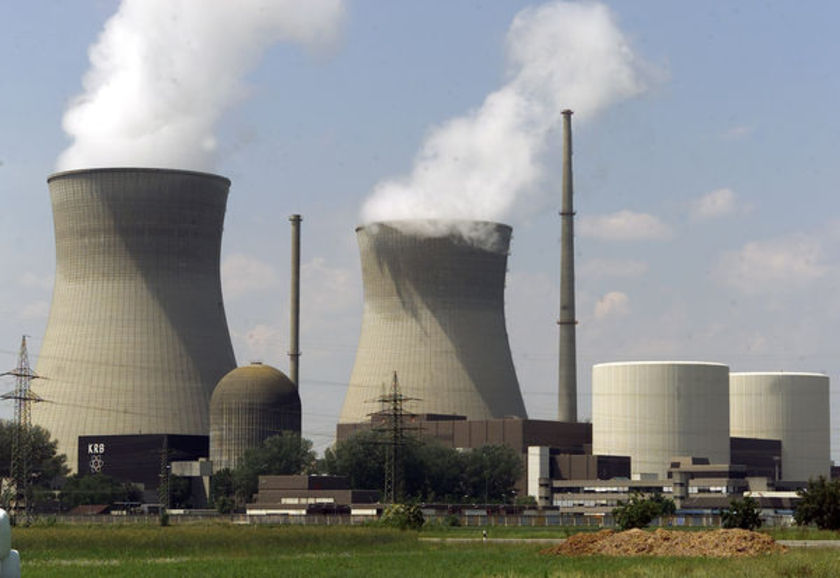
Nuclear power plants in Singapore

I have read some recent articles and speeches made by the government, and it is likely that the government of Singapore would build a nuclear power plant in the near future. I would like to state that I am not supportive of this idea. This would be a blog post on why I do not support the building of the nuclear plant.


First of all, let me start by talking about how the people who support the building of a nuclear power plant looks at the recent disaster in Japan. These people thinks that we will learn from our mistakes and never let another nuclear disaster happening again. However, how can we guarantee this? This was exactly what was said after the Chernobyl disaster, but then why did it happen again in Japan? As once said, Science can never fully solve a problem as it creates ten others. Furthermore, we cannot even anticipate every problem that nature throws at us.

To illustrate my point, let me compare a nuclear power plant disaster to something more people are familiar with, a plane crash. Factors resulting in a crash may be the result of negligent pilots, unexpectedly hush weather or some mechanical failure. From 2000 to 2010, over one hundred plane crashes happened. Although the aircraft industry had been around for decades, why is there such a problem?

The root cause is that humans cannot understand the uncountable types of disasters. Similarly, like the various causes of the crash, power plants have a variety of disaster. If there is a nuclear plant in Singapore, the correct question we should be asking is not if an accident of a nuclear plant is going to happen. Rather, it is when a disaster will happen.

Now, up to this point, let me tell you why some people support the construction of nuclear power plant in Singapore. First of all, in a modern metropolis, there is a rising demand for electricity, and they believe that the nuclear power plant is the key that will solve this problem. They argue, that these nuclear power plants will not pollute the environment, and although I have to agree with their argument, but, if we think about it, for these small profit, can we justify the need to put the millions of lives of people across the country at stake?

The Fukushima nuclear power plant accident has resulted in people living within a 20 km radius from the plant to be evacuated. Moreover, people cannot eat radioactive contamination from food near the nuclear plant area, and even watered has to be screened before the water is safe from drinking. However, this is just the tip of the iceberg. This are just the few minor and insignificant inconveniences a nuclear power plant accident can cause to our citizens.

This would be the true extent of a nuclear disaster in Singapore. The people would have nowhere to run from here, and practically everyone will suffer from radiation. If we are lucky enough to somehow survive that, we also have to take into consider the amount of resources to clean up all this mess we have unwittingly created for ourselves. To sum up, radiation not only pollutes the environment, but also claimes hundreds of thousands of lives. The amount saved in terms of electricity will be way surpassed after the nuclear disaster strikes.

Next, according to researches carried out near nuclear plants, nuclear power plants not only pollute the environment, but is continuously discharging a small amount of radiation, which makes people living near them have an increased risk of cancer.

All in all, I know that Singapore is a country of scarce natural resources, but does not allow us to solve the problem using nuclear energy. Nuclear energy does more harm than good, and for Singapore it is not worth it. Therefore, the construction of a nuclear power plant in Singapore should not be done.