Thursday, 14 July 2011

Book review: Gray Matter

Author: Gary Braver

Publisher: Tom Doherty Associates, LLC

Year published: 2004
Tone of story: Suspenseful (sophisticated fear)
Time/era of story: Present (2000-2010)
Theme:  Beware of making intelligence control you
Brief Synopsis:
Rachel Whitman regrets taking a drug when she was younger as she fears she has damaged her son’s brain. Although she knows that intelligence is not everything, she fears that her son will never grow up to appreciate the wonders of life. Like most parents, Rachel will do anything to improve her son's lifestyle and later, she gets obsessed with a medical procedure which she heard from her friend, Sheila. The procedure claims to make children turn into bright geniuses from slow children. After hearing this, Rachel desperately leaps at this hope. As Rachel uncovers information about the process, she becomes concerned about the procedure as something was wrong with the children who have had the procedure done. After noticing it, she starts to question how far she is willing to go for an ideal she is not even sure she believes in anymore.  However, she feels that it was her fault that Dylan suffered learning disabilities. She faces the moral dilemma between intelligence vs. happiness. She later decides that Dylan should not go for the operation, but with Sheila, her husband, and the doctor persuading her to go for the operation, will she give in?
On a separate case, many bright people are being kidnapped from different rural areas across the world, their bodies recovered on a beach. The corpse however, had strange, identical drill marks, made by very high speed cranioblade drills on the brain. Officer Zakarian is convinced that this is no coincidence, and is determined to find out why no matter what happens. As Zakarian investigates the disappearances of several children, it eventually intersects with Rachel's path with an unusual connection.
What I like/ dislike about this story:
I like Gray Matter as I find that this story is a well developed novel with comprehensive details such as the way Gary Braver describes the procedure of the operation. It is an original and clever story line that centers on the matter of human intelligence. He makes it very real and it feels as if they were all true. It is also a thought provoking and controversial novel about human intelligence. It challenged my view about human intelligence and I find that there is really more than intelligence alone. It also gives scary insights of what might happen in the future. I also liked the way each chapter introduces a character or theme and in the end the reader finally sees how it all comes together. Besides that, it is an easy read and totally accessible even though it is 400 pages of thought provoking intelligent material.
Would I recommend the book? Why?
Yes, I definitely would. The book is fast paced and it also gives the emotional tension and anxiety of a middle class status person. Gary Braver is also skillful in his plotting, notching up the tension incrementally. He also has some powerful descriptive passages, making it a fantasy story brought about to life while criticising our view on human intelligence. A must read for anybody.

Sunday, 15 May 2011

Comments on other people's blog for term 2

1) Nathan ("Mother's day special")

http://nathanang.blogspot.com/2011/05/mothers-day-special.html?showComment=1305209006905#c5826402569979922055

2) Ivan ("Different types of newspapers")

http://ivanlablog.blogspot.com/2011/04/different-types-of-newspapers.html?showComment=1305210765291#c1006049561055246583

3) Kee Xuan ("Should the Parents Maintenance Act be abolished?")

http://spongebobsayshitoyou.blogspot.com/2011/05/should-parents-maintenance-act-be.html?showComment=1305206823915#c9065542158081093345

4) Kai En ("Technology - A Progressive Undoing of the Human Race ")

http://kaiensblog.blogspot.com/2011/05/technology-progressive-undoing-of-human.html?showComment=1305423802776#c7178960440773827185

5) Kai En ("Different types of newspapers")

http://kaiensblog.blogspot.com/2011/05/different-types-of-newspapers.html?showComment=1305424888087#c7883261852711299464

6) Kee Xuan ("Reasons Why Students Should Wear School Uniforms to School ")

http://spongebobsayshitoyou.blogspot.com/2011/05/reasons-why-students-should-wear-school.html?showComment=1305426317651#c4824635083812903401

7) Wen Hong ("SAF man lets maid carry backpack")

http://language-artist.blogspot.com/2011/04/saf-man-lets-maid-carry-backpack.html?showComment=1305427575048#c2214461957053582050

8) Glenn ("Debate Topic: Should Singlish be an official language of Singapore? ")

http://arts-language.blogspot.com/2011/05/debate-topic-should-singlish-be.html?showComment=1305439335817#c4003099773167325951

9) Leonard ("Debate topic 1")

http://leonard-languageartsblog.blogspot.com/2011/05/debate-topic-1.html?showComment=1305441765777#c6451032310430993418

10) Raphael ("Stop STOMP")

http://twoeyeone.blogspot.com/2011/05/stop-stomp.html?showComment=1305444156229#c7896516022166108173

Saturday, 14 May 2011

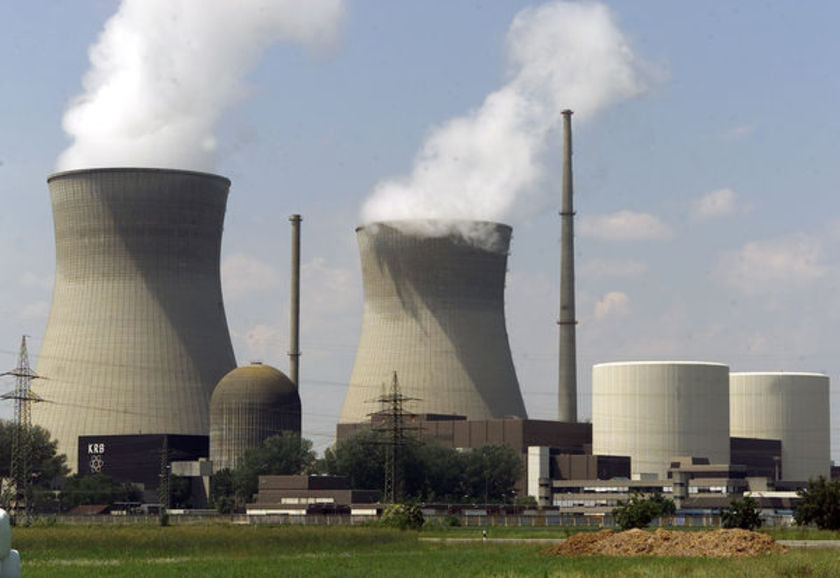
Nuclear power plants in Singapore

I have read some recent articles and speeches made by the government, and it is likely that the government of Singapore would build a nuclear power plant in the near future. I would like to state that I am not supportive of this idea. This would be a blog post on why I do not support the building of the nuclear plant.


First of all, let me start by talking about how the people who support the building of a nuclear power plant looks at the recent disaster in Japan. These people thinks that we will learn from our mistakes and never let another nuclear disaster happening again. However, how can we guarantee this? This was exactly what was said after the Chernobyl disaster, but then why did it happen again in Japan? As once said, Science can never fully solve a problem as it creates ten others. Furthermore, we cannot even anticipate every problem that nature throws at us.

To illustrate my point, let me compare a nuclear power plant disaster to something more people are familiar with, a plane crash. Factors resulting in a crash may be the result of negligent pilots, unexpectedly hush weather or some mechanical failure. From 2000 to 2010, over one hundred plane crashes happened. Although the aircraft industry had been around for decades, why is there such a problem?

The root cause is that humans cannot understand the uncountable types of disasters. Similarly, like the various causes of the crash, power plants have a variety of disaster. If there is a nuclear plant in Singapore, the correct question we should be asking is not if an accident of a nuclear plant is going to happen. Rather, it is when a disaster will happen.

Now, up to this point, let me tell you why some people support the construction of nuclear power plant in Singapore. First of all, in a modern metropolis, there is a rising demand for electricity, and they believe that the nuclear power plant is the key that will solve this problem. They argue, that these nuclear power plants will not pollute the environment, and although I have to agree with their argument, but, if we think about it, for these small profit, can we justify the need to put the millions of lives of people across the country at stake?

The Fukushima nuclear power plant accident has resulted in people living within a 20 km radius from the plant to be evacuated. Moreover, people cannot eat radioactive contamination from food near the nuclear plant area, and even watered has to be screened before the water is safe from drinking. However, this is just the tip of the iceberg. This are just the few minor and insignificant inconveniences a nuclear power plant accident can cause to our citizens.

This would be the true extent of a nuclear disaster in Singapore. The people would have nowhere to run from here, and practically everyone will suffer from radiation. If we are lucky enough to somehow survive that, we also have to take into consider the amount of resources to clean up all this mess we have unwittingly created for ourselves. To sum up, radiation not only pollutes the environment, but also claimes hundreds of thousands of lives. The amount saved in terms of electricity will be way surpassed after the nuclear disaster strikes.

Next, according to researches carried out near nuclear plants, nuclear power plants not only pollute the environment, but is continuously discharging a small amount of radiation, which makes people living near them have an increased risk of cancer.

All in all, I know that Singapore is a country of scarce natural resources, but does not allow us to solve the problem using nuclear energy. Nuclear energy does more harm than good, and for Singapore it is not worth it. Therefore, the construction of a nuclear power plant in Singapore should not be done.

Thursday, 12 May 2011

How is life going to be like in the future?

Today, I was looking through the History channel which was talking about the challenges that we faced today. I remembered vividly hearing this statement from somewhere:

For a world to progress, people have to think of themselves only

Do I agree? Read more to find out.

Challenges the world faces today

In an ever-changing world today, people are getting more and more competitive. People start outdoing each other, finding different ways and devious means in order to get what they want. According to US census, the population would rise to a staggering 9,309,051,539 from the current 6,840,423,256. Dwindling fossil fuels, overcrowding, an expected rise in more devastating natural disasters, sparse opportunities and resources would be the largest challenge humanity has yet to face. One might argue that these problems would not exist in the future because Science had solved it. However, in science there are four main categories which are —- natural, social and behavioural, applied and formal sciences. These categories can be even further sub-divided and all this just goes to prove that science is vast and is like a big puzzle. Science and technology will be unable to catch up with the ever mounting problems. As George Bernard Shaw once said " science never solves a problem without creating ten more ".

1st scenario:

In every part of the world, riot after riot will be held due to the failure to meet people's basic needs. Schools, businesses, research and others will be shut down for good. Progress will not resume until the impossible needs of every person is met. Those people who are selfless will be extinguished and only those who will think for themselves will survive. At that time, those who are selfless would be taken advantage and preyed upon by corrupted officials who are also struggling to make ends meet. At this point in time, it would be every man for himself.


Therefore only the strong will be able to survive then. Countries will have to battle it out to gain supremacy. Through this, country after country will fall, massacres will have to be carried out to reduce the ever-growing population. Finally, after peace resumes, the last country standing will finally be able to colonise the whole world, and hence progress will finally be restored.

2nd scenario:


Humans find a scientific breakthrough that allows us to travel to other worlds and start our colonisation of the whole universe, letting us have an eternal amount of resources and land space. As our population grows bigger and bigger, and with the resources to support ourselves, the progress of technology would increase dramatically, making human progress unstoppable.

3rd scenario:

Nothing is done. Resources have ran out, and the population of humans shrink gradually but slowly, and finally dies out.

How I feel:
 
For a world to progress, people do not only have to think of themselves only. The first scenario will only happen if humans are greedy and hungry for power. I think that if everyone would just work together, and work fast, we would have our ideal scenario 2. Although George Bernard Shaw once said " science never solves a problem without creating ten more ", there is always a first time for everything right? We still have about another billion years before the sun gets sucked out of orbit and I am sure that by then, with perserverance and consistentcy, we would achieve what we envision of.

War, a device that is possible to extinguish humanity

After watching a show on the national geographic regarding the dropping of nuclear bombs in Nagasaki and Hiroshima, it left a deep impression on me. I saw the gruesome clips of the people who suffered from the attack, and I knew many would not make it. That is why I decided to post on this topic.

There are two types of war. It can be classified as civil wars or wars between two or more countries. Today I would be talking about wars between countries.

How do external wars start?

Wars can start when the absolute leader of a country gets greedy and desires land or resources from other countries that are not willing to give. With no other alternatives, they therefore take it by force, starting a war. For example, Japan started a war by invading China as they felt that the Japanese deserved more land.

Besides this, wars can also start when the absolute leader of a country wants to prove his might and power. To show that oneself is powerful, the only way is winning a war and taking over another country. This happened very often in the ancient world, such as ancient China or Rome. The most recent one was started in Germany where Hitler wanted to prove his power and strength of his army.

The sad truth of war

During a war, thousands of soldier die after a clash between two countries. Bombs are also dropped on cities, sometimes leaving them as ghost towns.

As a country finally surrenders, the leader of the other country would want to take revenge on the citizens of the defeated country for making their country lose so many soldiers. This results to a massacre of the population in the defeated country, leading to more deaths.

However, the victorious country will not be able to hold on to the defeated country for long as other countries are afraid that they would have a similar fate and join forces and push back the victorious country.

In the end, nothing is achieved. Only more blood, tears and hardships would be made for the people. Moreover, even when war is over, prisoners of war who lived in the concentration camps are extremely weak, some would also die to the illness they contracted in the prisons. Besides that, victims of the war would also have emotional scars. Some might not be able to get over it and would choose to suicide.

This has already been shown by facts and figures in World War 1 and 2, such as genocide.

My stand on this issue

Why do we, as humans create these atrocities? How does one benefit from wars? To me, I do not see a purpose in war. What we are doing is extinguishing ourselves from the very face of the Earth. Wars are a waste of resources, together with a tragic loss of lives. Technology can also no longer be improved as quickly due to the involvement in war. In other words, wars simply retards the development of mankind.

Selfish reasons and lack of resources should are not justifiable for starting wars. Leaders should lead by example. Furthermore, "Men are all created to be equal", leaders of the countries should treat each other equally, and solve disputes amicably. In conclusion, I feel that there is simply no reason why any country should go into a war.

War poems -- A sign of love

As Dwight D. Eisenhower once said "Every gun that is made, every warship launched, every rocket fired signifies, in the final sense, a theft from those who hunger and are not fed, those who are cold and not clothed." Most people hate war. They write poems to express their feelings, their views on war, or to empathise with or glorify the people who suffered during the war. They show the true heart of a human who loves and care.

Typically, war poetry tries to capture the sadness, bravery, and sacrifice of ordinary men for their country and the brutality, cruelness and greedy creators of utter carnage. Besides that, it also tries to describe the futility of the mindset that drives this need for man to kill man, and how useless war really is.


(View some samples on war poetry at: http://www.poemhunter.com/poems/war/)

Thor 3D Movie review

Just last week, I watched a movie entitled Thor 3D. Here is a short synopsis of the movie:

Thor, a powerful but arrogant warrior, is sent down to Earth as punishment for reigniting a reckless war. But after a dangerous villain from his world sends the darkest forces of Asgard to invade Earth, the hammer-wielding Thor will learn what it takes to be a true hero in order to save mankind.

(taken from http://www.nowrunning.com/movie/8995/english/thor-3d/preview.htm)

What did I like about the movie?

First, let me talk about the successful setting of the movie. The movie started by showing the audience many large, golden buildings, with large golden palaces. One can almost immediately envision this setting as the future of Earth, where the gods live, and peace and tranquillity rules the land. Later, we are transferred to another world where we see ice all around, where shadows lurked everywhere. It was both an eerie and dull place, and this lets the audience feel the evil that is resonating from the world. Finally, we are taken to a scene we are more familiar with, which is Mexico. It was portrayed as a busy city where work and life carries on as usual, giving audience the feel of a typical day at work. These contrasting settings really had much detail and it actually gives the audience a hint of what was going to happen. For example, at the icy world, the eerie setting actually hints the audience that something bad was going to happen. As I see this change in the vivid description of the various settings, it makes me want to know more about what was going to happen, making my interest in the show all the more intense which, I will say, was really true for me. Therefore I would say the plus point of this movie was that it achieved the aim of describing the settings.

Besides that, I would say that the characterisation of the main characters were well done. The movie uses their actions and words to show, not tell, the distinctly different personalities of the different characters. For example, the movie showed Thor shouting "But now I am king!", showing the ferocity and defiance of Thor to his father.

Finally, I would have to say the futuristic feeling of the movie in overall was a contributing factor to the movie's success. These futuristic feelings were shown both in words and in the appearances of the people or buildings. For example, words like "Realm", "Catalyst" and "Way gate" were used, and pictures like the laser like beam when the space shuttle shot through the space were shown. As an audience, one really likes the idea of futuristic things in a futuristic world, and in my opinion, this movie has tapped on my, and the general audience's like of futuristic implications to make the movie even more interesting.

In conclusion, I would say I enjoyed the movie especially due to the above three reasons which made it stand out from ordinary movies. Of course, it is no different from any other movies in terms of an interesting beginning, rising action, climax and resolution.

Wednesday, 11 May 2011

General Elections 2011 -- A dismay to PAP

Why did the PAP get such a poor polling percent this year?

Today, let me analyse the reasons that led to the downfall of PAP in terms of the General elections 2011. Here are some statistics to show the number of votes attained as an overall percentage:

Year 2001 : 75.3%
Year 2011 : 60.1%

It can be seen that there has been a large dip in the number of votes the PAP has received this year, and this should be, in my opinion, a wakeup call to the government to self examine themselves.

What went wrong?

Negligence

First and foremost, the PAP has been closed towards the people’s views on issues, making themselves oblivious to what the people of Singapore were going through.

For example, it was reported in the Straits Times that Khaw Boon Wah, minister of health for Singapore, paid only $8 for a treatment for his heart surgery due to the many subsidies he received. With this, he claimed how great Medisave and Medishield were. However, what he was oblivious to was that, the people of Singapore paid by the thousands for a heart surgery. How did the minister get such a cheap price? People were complaining .This made people very angry as the minister does not even know that the policy he mentioned only worked for a small group of people. He was unaware about the reality being that medical care was really expensive and not enough has been done to help the citizens.

Admits mistakes at the eleventh hour

Why did the government not realise or admit the mistakes that resulted to challenges Singapore faced today? Just before the elections, it can be heard all over the radios, televisions, that the prime ministers apologise for the rising cost of living etc. Also, why was there this "Talk with the Prime Minister" show to allow communication between the government and citizens only one month before the election?

Before this, no mention of these problems were ever made. Why was this the case? The PAP claims to be a responsible, honest party, but I think by doing this, they violated their values that people cherished. In my opinion, the government could have identified these problems, and implement solutions way before the elections. This is also a problem of negligence. The government did not even know that such problems exist.


Weak candidates

Another crucial factor was the candidates the government sent in. A large number of candidates which will form the Parliament were mostly newcomers and had little or no experience on politics. What I feel was the worst thing the government did was: to put candidates just to feel up empty seats or to take over from the senior politicians.

The most controversial figure would be Tin Pei Ling. The way she presents herself says it all. Senior Minister Goh Chok Tong even admitted later that "Tin Pei Ling was a factor of weakness". This shows that the PAP did not vet through their candidates properly before sending them for the elections. A sign of arrogance, this was also not accepted by the public.

What is the takeaway I got from this general elections?

From this General elections, I learnt that I should not take what I have for granted. Whatever we have, we must treasure. Let me give an analogy. People do not live forever, one will grow old someday and eventually pass away from the face of the Earth. In this limited time that person is with us, if we do not tell the person what we want to tell, we might never get a second chance. The same thing applies for the General elections. If the government does not look after its citizens before the next election, the government might lose its place, and there might never be a second chance to reclaim it once the trust from the citizens is lost.

Another takeaway from this General elections would be the result of complacency. In my opinion, the root of all the problems the PAP faced this year was complacency. There are many examples to show how the PAP were complacent, such as not being receptive to ideas, poorly organised new team of candidates and refusal to admit mistakes right from the beginning. Let us not follow the emperor in ancient China, where the doors were closed to the outside world. Complacency will result to a downfall.

Conclusion

Nonetheless, PAP has managed to retain its government to a large extent. Let this be a second chance to prove to the citizens of Singapore that the PAP has what it takes to govern Singapore in the next elections, and make the people of Singapore have no doubts next time when casting their votes.